

The document that sets the rules for how Nigeria is governed.
If Nigeria were a game, the Constitution would be the rulebook.
It tells us how the country is structured, where government gets its powers, what different public offices can and cannot do, how power is shared between different levels of government, and what rights citizens are entitled to.
And yet, for a document that affects practically every Nigerian, most of us probably know very little about what is actually inside it.
So, let’s start with the basics.
What Exactly Is a Constitution?
A constitution is the fundamental framework of a country.
It establishes the structure of government and sets out the powers and responsibilities of its institutions. It also establishes certain rights, principles, and obligations that shape the relationship between the state and its citizens.
A simple definition is:
A constitution is a set of fundamental principles and laws that establishes how a country is governed.
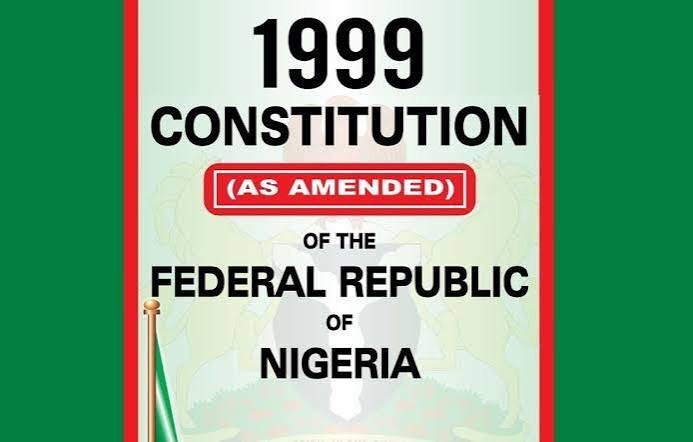
Nigeria’s current Constitution is the Constitution of the Federal Republic of Nigeria, 1999 (as amended).
The important part here is “as amended.”
The Constitution is not completely frozen in time.
It has been altered over the years through constitutional amendment processes, including several Fifth Alteration Acts enacted in 2023.
But there is one principle that remains fundamental:
The Constitution is the supreme law of Nigeria.
Section 1 establishes the supremacy of the Constitution and provides that any law that is inconsistent with it is void to the extent of the inconsistency.
In simpler terms:
Even government has rules.
And Who Does the Constitution Actually Belong To?
This is an interesting one.
The Constitution begins with the words:
“We the people of the Federal Republic of Nigeria…”
That opening matters.
The Constitution is built around the idea that governmental authority ultimately derives from the people.
Section 14 also provides that sovereignty belongs to the people of Nigeria, from whom government derives its powers and authority.
So, when we talk about “government,” we are not talking about some institution that exists above the people.
The constitutional idea is that government exists on behalf of the people and within powers defined by the Constitution.
That changes how we should think about public office.
The President, Governor, Senator, Representative, Minister, Commissioner, and other public officials do not own the powers attached to their offices.
They exercise powers created and limited by law.
So What Is Actually Inside It?
Quite a lot, actually.
The Constitution covers everything from citizenship and elections to government institutions, public finance, the courts, fundamental rights, and the relationship between different levels of government.
It establishes the three arms of government:
The Executive.
The Legislature.
The Judiciary.
It also establishes the Federal Republic as a federation and distributes legislative powers between the Federal Government and the states.
This is important because the Constitution is not simply a document about the President.
It provides the framework within which the entire Nigerian government operates.
And that includes the government closest to many people’s everyday lives:
state and local government.
Federal Government vs State Government: Who Is Responsible for What?
This is one of the most practical things to understand about the Constitution.
Nigeria is a federation.
That means governmental powers are divided between different levels of government.
The Constitution’s legislative framework includes an Exclusive Legislative List, covering matters on which the National Assembly has legislative authority, and a Concurrent Legislative List, covering areas where both the Federal and State Governments can legislate within the constitutional framework.
Why does this matter?
Because when Nigerians ask:
“Why hasn’t the government fixed this?”
the next question should sometimes be:
“Which government?”
The Federal Government, state governments and local governments do not have identical constitutional powers or responsibilities.
Understanding that distinction makes it easier to understand where responsibility actually lies.
It also explains why debates around issues such as policing, electricity, railways, local government autonomy and the distribution of powers frequently become constitutional debates.
In fact, several of these issues have been the subject of constitutional alteration proposals and amendments over the years.
What About My Rights?
This is one of the most important parts of the Constitution for ordinary Nigerians.
Chapter IV contains Nigeria’s Fundamental Rights.
These include:
The right to life
The right to dignity of the human person
The right to personal liberty
The right to fair hearing
The right to privacy and family life
Freedom of thought, conscience and religion
Freedom of expression and the press
Freedom of peaceful assembly and association
Freedom of movement
Freedom from discrimination
The right to acquire and own immovable property
These aren’t simply nice ideas written on paper.
They are constitutional rights.
For example, Section 33 protects the right to life, while Section 35 protects personal liberty. Sections 39 and 40 address freedom of expression and freedom of peaceful assembly and association, respectively. Chapter IV contains these enforceable fundamental rights.
And there is a mechanism for enforcing them.
If someone believes their fundamental rights have been violated, Section 46 provides a route to approach a High Court for redress.
So the Constitution isn’t merely telling government:
“Please respect people’s rights.”
It also provides a legal route through which certain rights can be defended.
But Are Constitutional Rights Unlimited?
No.
This is another important part of understanding the Constitution.
Rights exist within a constitutional framework.
The Constitution provides circumstances in which certain rights may be restricted by law, including considerations relating to public safety, public order, public health and the rights and freedoms of other people.
This is why constitutional rights can sometimes become the subject of serious legal disputes.
Two people can agree that a constitutional right exists while disagreeing about whether a particular restriction is lawful.
That is where constitutional interpretation, and ultimately the courts, becomes important.
Here Is Something Many Nigerians Don’t Know
Not everything written in the Constitution operates in the same way.
For example, Chapter II contains the Fundamental Objectives and Directive Principles of State Policy.
These include provisions dealing with political, economic, and social objectives such as welfare, education, healthcare, economic participation, and social justice.
They are extremely important statements of what the Nigerian state is expected to pursue.
But they are not treated in the exact same way as the fundamental rights in Chapter IV.
This distinction matters.
For instance, Nigerians often hear statements such as:
“The Constitution gives me a right to free education.”
The reality is more nuanced.
Section 18 directs government towards educational objectives, including free and compulsory primary education and other educational provision “as and when practicable.”
That is different from the directly enforceable fundamental rights contained in Chapter IV.
So when reading the Constitution, we should ask not only:
“What does it say?”
but also:
“What kind of constitutional provision is this?”
That distinction can completely change how a provision operates in practice.
What About Citizens’ Responsibilities?
We often talk about what the Constitution gives Nigerians.
But the Constitution also talks about what Nigerians owe the country.
Section 24 sets out duties expected of citizens.
These include respecting the dignity of other individuals, contributing to the welfare of society, respecting the Constitution and national symbols, and helping to maintain law and order, among other responsibilities.
So the constitutional relationship isn’t simply:
Government gives. Citizen receives.
There are responsibilities on both sides.
The state has constitutional obligations.
Citizens also have constitutional responsibilities.

Can the President Do Whatever He Wants?
No.
This is one of the most important things to understand about government.
The President has significant constitutional powers, but those powers are not unlimited.
The same Constitution that establishes the office of the President also establishes other institutions and places limits on how governmental power is exercised.
The President cannot simply decide that a law does not apply because he is President.
A Governor cannot simply ignore the Constitution because they were elected.
A law passed by the National Assembly cannot automatically override the Constitution.
And a citizen cannot simply be deprived of a constitutional right without regard to the law.
The Constitution provides the framework within which all these powers operate.
So Who Checks Whom?
This is where the idea of separation of powers becomes important.
The Constitution distributes governmental authority among the Executive, Legislature, and Judiciary.
The Executive implements and administers government.
The Legislature makes laws and performs oversight functions.
The Judiciary interprets the law and determines legal disputes.
The idea isn’t that these institutions should operate completely independently of one another.
It is that governmental power should not simply be concentrated in one place.
The Constitution therefore creates institutions that can exercise different forms of authority and, within their constitutional powers, check or constrain one another.
That is part of what prevents government from becoming simply:
“One person decides everything.”

But Who Protects the Constitution?
This is where the Judiciary becomes particularly important.
Courts interpret the Constitution and other laws when legal disputes arise.
If there is a disagreement about whether a government action is constitutional, that question can ultimately become a matter for the courts.
This is one reason an independent judiciary matters in a constitutional democracy.
The Constitution isn’t just a document government officials are expected to read.
It is also a standard against which government action can be tested.
And when a court declares an action unconstitutional, the question is no longer simply political.
It becomes a question of constitutional law.
Can the Constitution Be Changed?
Yes.
But not casually.
The Constitution provides a specific amendment procedure.
Section 9 sets out the constitutional process for altering its provisions.
This requires substantial legislative agreement and, for most constitutional alterations, approval by a required proportion of State Houses of Assembly.
This is important because the Constitution is designed to be stable, but not completely untouchable.
Nigeria can change its constitutional rules.
But changing the country’s foundational rules requires a much higher threshold than passing an ordinary law.
That's why constitutional amendment is often a major political and legal process.
What Does the Constitution Say About Elections?
Quite a lot.
The 2027 elections are around the corner, and we cannot keep going to the polls in ignorance…
The Constitution establishes important offices, sets constitutional qualifications for several elective positions, provides for the National Assembly and State Houses of Assembly, establishes the framework for the electoral system, and provides for institutions such as the Independent National Electoral Commission.
It also establishes the constitutional framework for presidential and governorship elections, including provisions dealing with qualifications, tenure, and succession.
So when Nigerians argue about elections, they aren’t only arguing about politicians.
They are often arguing about rules contained in, or derived from, the Constitution.
And What About Money?
Here’s another part of the Constitution that affects your everyday life even if you’ve never opened it.
The Constitution contains provisions concerning public revenue and the Federation Account, including the distribution of certain revenues among the Federal, State, and Local Government levels.
This means constitutional law isn’t only about courts and political offices.
It is also connected to questions such as:
How is public money shared?
Who gets what?
What financial powers belong to which level of government?
How much control should states and local governments have over their finances?
These are constitutional questions too.
Why Does the Constitution Matter to Me?
It is easy to hear the word “Constitution” and immediately think of lawyers, courtrooms and complicated legal language.
But the Constitution affects everyday life.
It affects how elections are organised.
It affects who has what powers.
It affects the relationship between the Federal Government and the states.
It affects how public institutions are structured.
It establishes fundamental rights.
It sets out certain duties expected of citizens.
It provides the framework for public finance and the distribution of governmental powers.
It determines the constitutional rules surrounding some of the offices Nigerians argue about every day.
And it gives citizens a framework for questioning the exercise of governmental power.
So, Should Every Nigerian Read the Constitution?
Probably.
But you don’t have to start by reading all 300-plus sections like you’re preparing for a law exam.
Start with the parts that answer the questions you ask about Nigeria every day.
Who has this power?
Who is responsible for this?
What are my rights?
What are my responsibilities?
Can government legally do this?
Who can challenge it?
How can the rules themselves be changed?
Those questions take you into the Constitution.
Understanding it doesn’t mean memorising every section.
It means knowing that there is a framework governing the country, knowing that government powers have limits, understanding that different levels of government have different responsibilities, and knowing that citizens have rights recognised by the country’s highest law.
Because when you don’t know the rules, it becomes much harder to recognise when the rules are being broken.
And perhaps that’s the simplest way to understand the Constitution:
It is the rulebook for the Nigerian state.
But there’s one more thing worth remembering.
A Constitution can establish rights.
It can establish institutions.
It can establish limits on power.
It can establish procedures.
But a document cannot enforce itself.
Its effectiveness depends on institutions, public officials, courts, citizens, and the broader political and legal system operating within the constitutional framework.
Which means understanding the Constitution isn’t just about knowing what government is allowed to do.
It is also about understanding what citizens can demand from government, what citizens owe one another, and what mechanisms exist when the rules are challenged.
And perhaps that’s why constitutional literacy matters.
Because democracy isn’t only about knowing who won the election.
It is also about knowing what powers the winner actually has.
Next in Nigeria 101:
Who Actually Runs Nigeria?
The President is the most visible political figure in Nigeria, but government is much bigger than one person.
There are Ministers, Governors, Senators, Members of the House of Representatives, State Commissioners, Local Government officials, judges, permanent secretaries, agencies, commissions and institutions- each with different powers and responsibilities.
So who actually does what?
Let’s meet the people and offices that make up Nigeria’s political system.