

If you’ve ever heard someone say, “The government should do something about this,” you’ve probably used the word government to describe a very large group of people and institutions.
And that’s understandable.
On this edition of Nigeria 101, we are talking about the Arms of Government
When electricity goes out, when a new law is passed, when someone is arrested, when taxes change, or when a court makes a major decision, it can all feel like one giant machine called “the government.”
It isn’t.
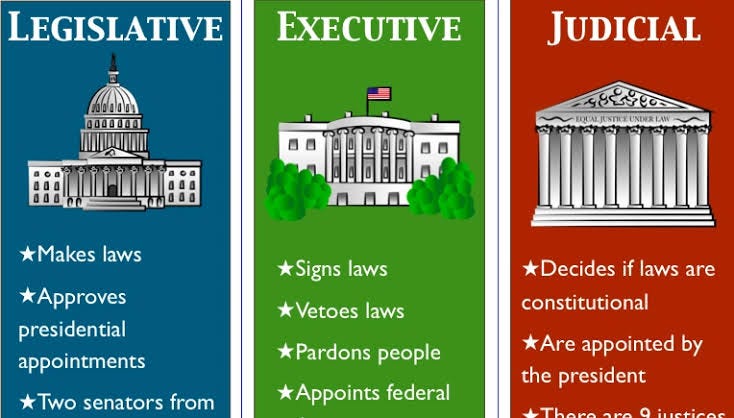
Nigeria’s government is divided into three arms: the Executive, the Legislature, and the Judiciary.
They each have different responsibilities, and understanding those responsibilities is important because it helps us know who is actually responsible for what.
As Nigeria’s elections draw near, a recent, curious, and restless breed of Nigerians is formed, and knowledge is key, as well as its application.
Think of the government as three different parts of the same system.
They are supposed to work together, but they are not supposed to do the same job.
1. The Executive
The Executive is the arm most Nigerians probably recognise most easily.
This is where the President comes in.
At the federal level, executive power is vested in the President. The President exercises this power directly and through the Vice President, ministers and other public officers. At the state level, executive power belongs to the Governor, who works through the Deputy Governor, commissioners and other state officials. (Plaq Nigeria link to The Constitution of the Federal Republic of Nigeria 1999)
So what does the Executive actually do?
In simple terms, it runs the government and implements the laws.
If the National Assembly passes a law, somebody has to actually put that law into action.
That’s where the Executive comes in.
The President is responsible for things such as national security, foreign affairs, and the implementation of federal laws and policies.
Ministers oversee different areas of government on behalf of the President.
Governors perform a similar executive role at the state level.
So when you hear about the Minister of Education, Minister of Health, Minister of Finance, or a state Commissioner for Education, you’re looking at people working within the Executive arm.
But here’s an important distinction:
The President does not make every law in Nigeria.
That’s the Legislature’s job.
Which brings us to…
2. The Legislature
If the Executive runs and implements, the Legislature makes laws.
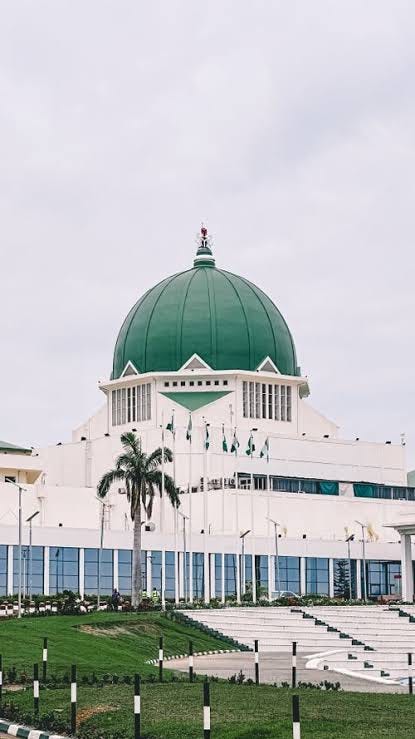
At the federal level, Nigeria’s Legislature is called the National Assembly, and it has two chambers:
The Senate
and
The House of Representatives.
Together, they make up Nigeria’s federal legislature. The Senate has 109 members, while the House of Representatives has 360 members. (National Assembly of Nigeria)
Their job goes beyond simply sitting in Abuja and voting on bills.
The Legislature represents citizens, makes laws, approves certain government spending and appointments, and oversees the Executive.
That last part matters.
Oversight essentially means keeping an eye on what the Executive is doing and asking questions when necessary.
If the Executive proposes a policy or spends public money, the Legislature has a role in examining and scrutinising those actions.
This is part of what is known as checks and balances.
The idea is simple: no single arm of government should have unlimited power.
The Legislature is therefore not simply there to “support the President.”
It is a separate arm of government with its own constitutional responsibilities.
3. The Judiciary
Then there is the Judiciary.
This is the arm responsible for interpreting and applying the law and resolving legal disputes.
The Constitution vests judicial powers of the Federation in the courts established for the Federation, while judicial powers of a state are vested in the courts established for that state. (Plaq Nigeria)
This is where judges and courts come in.
If two people have a legal dispute, the courts can determine the matter.
If someone is accused of breaking the law, the courts are part of the process through which that case is determined.
And if there is a disagreement over whether an action by a public official or institution is lawful, the courts can be called upon to interpret the relevant law.
At the top of Nigeria’s judicial system is the Supreme Court.
But the Judiciary isn’t simply “the people who put criminals in jail.”
It is much broader than that.
The courts are also an important part of protecting rights, interpreting the Constitution, and ensuring that government actions remain within the law.
So, Who Is Actually in Charge?
This is where things get interesting.
If the President leads the Executive, the National Assembly makes laws, and the Judiciary interprets the law…
Who is the boss?
The answer is: none of them is supposed to be the boss of all three.
Nigeria’s system is built around the principle of separation of powers.
The Constitution allocates governmental powers among the three arms, while checks and balances are intended to prevent one arm from becoming all-powerful. (National Assembly of Nigeria)
That means the arms have different responsibilities but also interact with one another.
For example, the Legislature makes laws, but the Executive is responsible for implementing them.
The Executive proposes policies and makes certain appointments, but the Legislature has constitutional powers involving legislation, public funds, oversight and confirmation of certain appointments.
The Judiciary interprets the law and can determine legal disputes involving government and citizens.
It’s less like three separate islands and more like three parts of one system that are supposed to keep one another in check.
Why Should Nigerians Care?
Because knowing who does what changes the way we hold government accountable.
If a state road is bad, the relevant state authorities may be different from the people responsible for a federal road.
If a bill hasn’t become law, blaming the President for not “passing it” misunderstands the legislative process.
If a court gives a judgment we disagree with, that doesn’t automatically mean the President can simply overturn it.
And when we understand these distinctions, our questions become more precise.
Instead of simply asking:
“Why isn’t the government doing anything?”
we can start asking:
“Which arm or level of government is responsible for this, and what exactly are they doing about it?”
That is the point of understanding how Nigeria works.
Not so everyone can become a constitutional lawyer.
Not so we can memorise government terminology for an exam.
But because democracy works better when citizens understand the system they are living under.
The three arms of government are not just names we memorised in secondary school.
They are three parts of the machinery that governs Nigeria.
And if we don’t know what each part is supposed to do, it becomes much harder to know when that part isn’t doing its job.
Next in Nigeria 101:
What Does the Constitution Actually Say?
Because before we can understand what Nigerian leaders can and cannot do, we need to understand the document that sits above them all: the Constitution of the Federal Republic of Nigeria.
Hi, thank you so much. I am still a bit uncertain about the judiciary system. So they are the judges and court, assigned by the executive system, to guide everyone (officials and citizens, plus theirselves) to follow the constitution that was ultimately made by the legislature(the representatives of the citizens)? Please correct me if wrong